
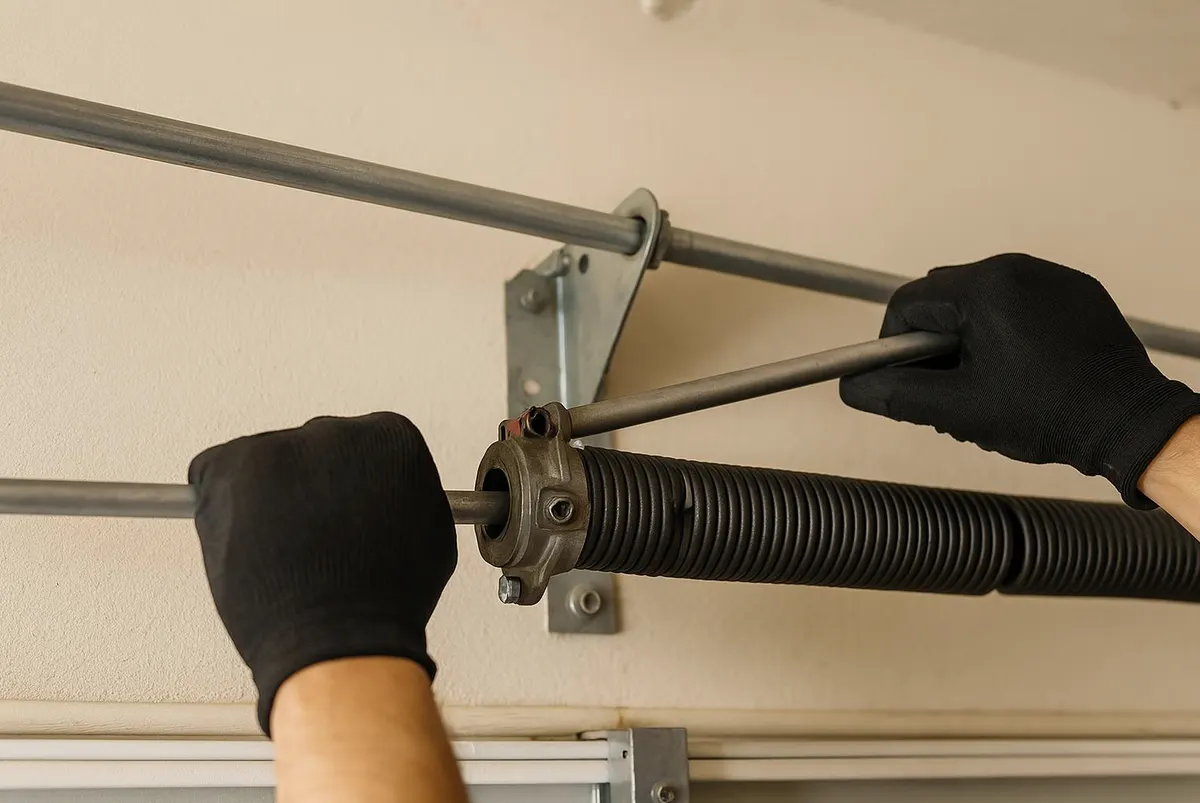
A technician pulls into a driveway because a homeowner called about a door that won't open smoothly anymore. The panels are bowed slightly from years of humidity swelling the wood, the bottom section has a rust line from standing water after summer storms, and the springs are original to a house built two decades ago. Within five minutes the conversation shifts from "can you fix this" to "what would a whole new door even cost." That question comes up constantly, and the honest answer is: it depends on more variables than most people expect.
Here's a straightforward breakdown of what moves the price of a new garage door, installed, using national cost ranges. These are ranges, not quotes — your actual number depends on size, material, options, and what your installer finds once the old door comes down.
What Actually Drives the Price
- Size and number of doors — A single-car door is naturally cheaper than a double-wide, and a two-car garage with separate doors costs more than one wide door covering the same opening.
- Material — Steel, aluminum, wood, composite, and fiberglass all land in different price tiers, and each handles heat, humidity, and salt air differently.
- Insulation — A single-layer uninsulated door costs less upfront but does little to block heat transfer into an attached garage. Insulated doors cost more but help with Florida's long cooling season.
- Windows and decorative hardware — Glass inserts, faux hinges, and handles add style and add cost, and more seams mean more spots that need weatherproofing against wind-driven rain.
- Wind-load and impact rating — Many Florida homeowners need a door engineered to meet local wind-load requirements. Reinforced doors built for storm conditions typically cost more than a standard residential door of the same size.
- Opener compatibility — If the new door is heavier (common with insulated or wood-look doors), the existing opener may need to be upgraded to handle the load safely.
- Removal and disposal of the old door — Hauling away a rusted, swollen, or storm-damaged door adds a modest but real line item.
- Labor and site conditions — An older track system, out-of-square framing, or extra bracing needed for wind resistance all affect install time.
Typical Cost Ranges by Door Type
Basic Steel (Uninsulated or Single-Layer)
This is the entry point for most replacement jobs: a single layer of steel, no insulation, minimal styling. Installed, these commonly run in the $700 to $1,500 range nationally for a standard single-car opening, more for a double-wide. It's a functional, budget-friendly option, but in a hot, humid climate it offers little thermal buffer and can transfer heat and noise into an attached garage.
Mid-Grade Insulated Steel
Two- or three-layer steel doors with polyurethane or polystyrene insulation sandwiched between steel skins are the most common upgrade homeowners choose. These typically run $1,200 to $2,800 installed, depending on size and R-value. The added insulation helps regulate garage temperature and cuts down on the drumming sound of heavy rain on bare steel.
Wood and Wood-Composite
Real wood doors bring a custom, high-end look but require more upkeep in a humid climate — regular sealing and repainting to resist swelling, warping, and rot. Wood or wood-composite doors generally run $2,000 to $5,000+ installed. Composite versions (engineered wood look-alikes) often land in a similar range but resist moisture damage better than solid wood, which matters a lot given seasonal downpours.
Custom Carriage Style
Carriage-style doors — the ones designed to look like old swing-open barn doors but operate on a standard track — are popular for curb appeal. Built in steel, they can run $1,500 to $4,000 installed; in wood or premium composite with full hardware packages, costs can climb to $3,500 to $7,000 or more. The price swings widely based on hardware detail, window configuration, and insulation level.
Costs People Forget to Budget For
- Opener upgrades — A heavier insulated or wood-style door may need a stronger motor, which is a separate cost from the door itself.
- Reinforcement for wind-load compliance — Bracing kits or engineered panels built to meet wind-rated standards can add to both material and labor costs.
- Trim and weatherstripping — New seals around the door help keep wind-driven rain out during storm season, but they're sometimes quoted separately from the door itself.
- Corrosion-resistant hardware — Galvanized or stainless hinges, rollers, and tracks cost a bit more but last longer against salt air and humidity than standard-coated parts.
When to Call Orange Lake Overhead Door Co
If your current door is rusting at the bottom panel, sagging off its rollers, or just outdated and inefficient, it's worth having someone look at the whole system before you commit to a new door. Sometimes what looks like a reason to replace everything is actually solved with Garage Door Panel Replacement instead of a full swap. Other times the door is fine but the motor isn't up to the new door's weight — that's where Garage Door Opener Installation comes in. Either way, we'll walk the opening, check the track and hardware condition, and give you options instead of a one-size answer.
If you're weighing a new garage door for your home near Orange Lake, Ocala, Citra, McIntosh, Reddick, Micanopy, Hawthorne, or Belleview, call Orange Lake Overhead Door Co for an on-site look and a clear, honest estimate.