
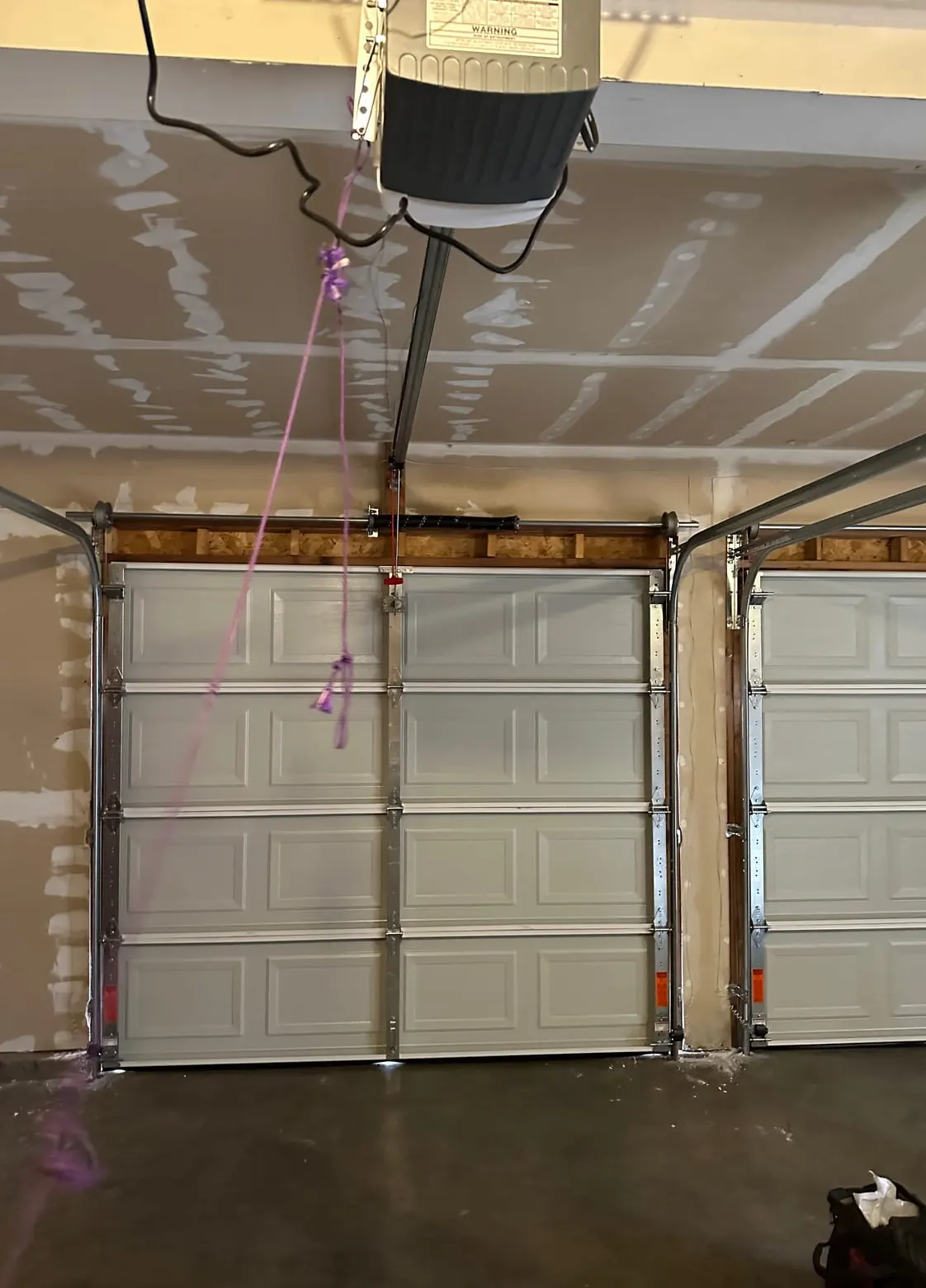
The Door Won't Close, and the Light Won't Stop Blinking
You press the button on the wall or the remote in your truck, and the door starts down, only to stop a few inches from the floor and reverse back up. Or it never moves at all, and the little light on the opener motor just blinks at you in a steady, annoying rhythm. You check the remote batteries, you check the breaker, and everything seems fine. The problem is almost always a pair of small plastic boxes mounted a few inches off the garage floor on either side of the door track: the photo-eye safety sensors.
These sensors send an invisible infrared beam across the opening. If something breaks that beam while the door is closing, the opener reverses the door instead of letting it keep going. It's a simple system, and it works well right up until something knocks it out of alignment or coats the lens with grime, which in this part of Florida happens more often than most homeowners expect.
Why Photo-Eyes Trip in a Marion County Garage
A few things cause false trips or dead sensors far more often than people realize:
- Bumped brackets. A bike leaned against the track, a mower backed in too close, or a stack of storage bins can nudge a sensor bracket just enough to throw off the alignment by a fraction of an inch. That's enough to break the beam connection.
- Dust, pollen, and spiderwebs. Garages here stay warm and a little humid most of the year, which spiders love. A web strand or a film of dust across the lens can scatter the beam enough to cause intermittent reversals.
- Condensation. When humid air meets a cooler lens surface, especially after a cold snap or when the garage holds AC overnight, a thin fog can form on the glass. It usually clears on its own, but it will cause random trips while it's there.
- Direct sun angle. As the sun sits lower in the sky through late fall and winter, afternoon light can shine almost straight into a receiver eye and overwhelm the signal, especially if the garage faces west.
- Rust on the mounting hardware. Salt-tinged air and routine moisture exposure can corrode the small bracket screws and wing nuts over time, letting the bracket creep out of position even without being bumped.
- Storm debris and downpours. After one of the season's heavy afternoon thunderstorms, wind-blown dirt, grass clippings, or leaves can end up stuck to the lens from a door left cracked open, or splashed water can leave mineral spots once it dries.
How to Clean and Realign Them Yourself
Most photo-eye problems are fixable in under fifteen minutes with no tools beyond a screwdriver.
- Check the indicator LEDs. Most sensor pairs have a small light on each unit. A solid, steady light on both sides usually means they're aligned and talking to each other. A flickering or dark light points to misalignment or a dirty lens.
- Wipe both lenses gently. Use a soft, lint-free cloth with a little water or glass cleaner. Avoid paper towels, which can leave scratches, and never use anything abrasive.
- Check for anything in the beam path. Low shelving, a broom leaning in the corner, or holiday decorations stored along the wall can all interrupt the line between the two sensors even when nothing is technically wrong with the hardware.
- Loosen and realign. If the LED still won't go solid, loosen the wing nut or screw holding the bracket and gently tilt the sensor until the light steadies. A laser pointer or even a flashlight held level with the lens can help you eyeball a straight line across to the other side.
- Tighten and retest. Snug the bracket back down, then close the door and pass a broom handle through the beam path partway down. The door should stop and reverse immediately. If it doesn't, stop using the opener until it's fixed.
- Inspect the brackets themselves. If you notice rust, pitting, or a bracket that wiggles even when tightened, the hardware itself may need to be replaced rather than just adjusted.
Why You Should Never Bypass Them
When a sensor keeps causing problems, some homeowners discover they can hold down the wall button to force the door closed, ignoring the sensor altogether, or they've heard of someone wiring around the sensors entirely. Don't do either. Auto-reverse photo-eyes have been standard safety equipment on residential garage door openers for decades for a simple reason: a garage door is heavy, and it closes with enough force to seriously injure a child, pet, or adult who doesn't react in time, or to crush a car bumper, cooler, or bike left in the path. A sensor that's acting up is telling you something needs attention, not something that should be removed from the equation. Fix the alignment or replace the unit; don't disable the function.
When to Call Orange Lake Overhead Door Co
If you've cleaned and realigned the sensors and the door still reverses randomly, or if you find the bracket itself is bent, rusted through, or the wiring looks chewed or frayed, it's time to call in a technician rather than keep fighting it. As part of a Garage Door Maintenance & Tune-Up, we check sensor alignment, wiring connections, and bracket condition along with springs, cables, and rollers, so small issues get caught before they strand the door shut during a storm. If a sensor bracket got knocked loose because the track itself is bent or pulled away from the wall, that often points to a bigger problem we handle through our Off Track Door Repair service.
If your garage door in Orange Lake, Ocala, Citra, McIntosh, Reddick, Micanopy, Hawthorne, or Belleview is giving you trouble with a blinking light or a door that won't stay closed, give Orange Lake Overhead Door Co a call. We'll get it diagnosed and working safely, fast.